
Every guild starts the same way: a few friends, one Discord server and a lot of good intentions. Then the roster grows past twenty people, the raid schedule fills up, a second game arrives and suddenly the guild leader spends more time managing than playing.
If that sounds familiar, this guide is for you. We will look at where guild management really breaks, why spreadsheets and pinned messages stop working, and what a dedicated guild management tool should do for you, for free.
😮💨 The hidden workload of running a guild
Guild leaders rarely burn out because of the game. They burn out because of everything around it:
- Answering the same recruitment questions again and again.
- Chasing people who said "maybe" for tonight's raid.
- Remembering who actually showed up last week.
- Deciding who deserves the next big drop, and defending that decision.
- Keeping officers, roles and permissions in sync across Discord and the game.
None of this is gameplay, yet all of it decides whether a guild survives its first six months. When the work lives only in one person's head, the guild depends on that person never taking a break.
📊 Why spreadsheets and pinned messages stop working
Spreadsheets are where most guilds start, and for a small group they are fine. They fail as soon as the guild grows:
- They go stale. A sheet is only as current as the last person who edited it, usually the leader at 2 a.m.
- They do not talk to Discord. Members live in Discord, not in a shared sheet, so sign-ups and updates are copied by hand.
- They have no permissions. Either everyone can edit everything, or one officer becomes the bottleneck.
- They have no history. When someone asks "why did they get that item?", there is no record of who decided what, and when.
Pinned Discord messages and reaction sign-ups help for a while, but they scatter information across channels and disappear as soon as the conversation moves on.
📝 Recruitment: where good players get lost
A guild lives on new members, yet recruitment is often the most chaotic part. Applications arrive as direct messages, forum posts or random chat lines. Nobody knows who already answered, and good candidates wait days for a reply.
A structured application flow fixes this: custom questions, a single link you can share anywhere, a clear pending / accepted / declined status and a review that officers can do in the panel or directly in Discord.
📅 Events, RSVP and no-shows
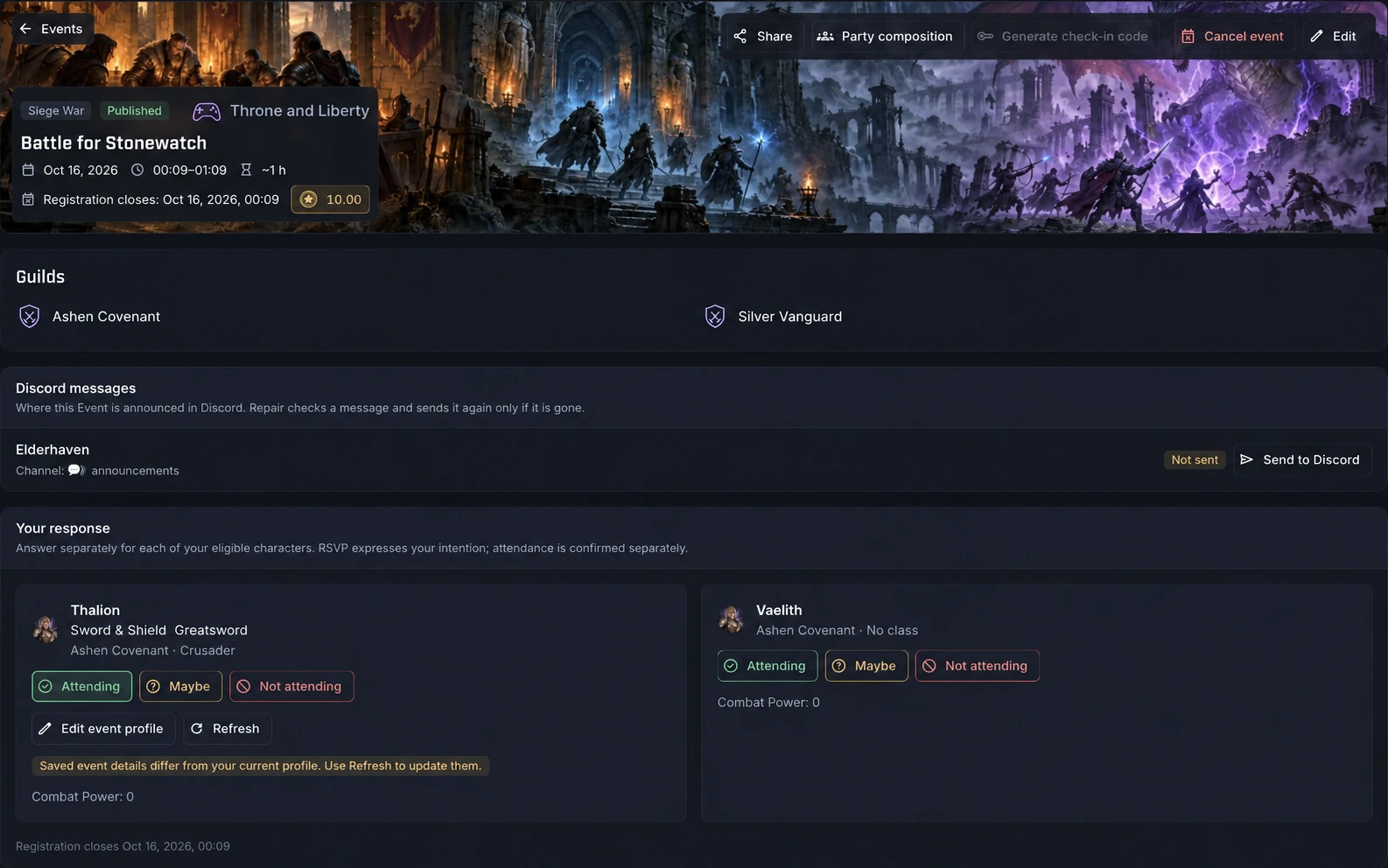
"Who is coming tonight?" is the most common question in any raiding guild. Reaction emojis cannot tell you which character someone will bring, whether the party has enough healers, or who silently skipped the last three events.
Good event tooling separates two things that spreadsheets mix up:
- RSVP – what people intend to do (attending, maybe, not attending), per character.
- Attendance – who actually showed up, recorded by organizers or by check-in.
Once you track both, planning gets easier and no-shows become visible without awkward conversations.
💰 Fair loot without the drama
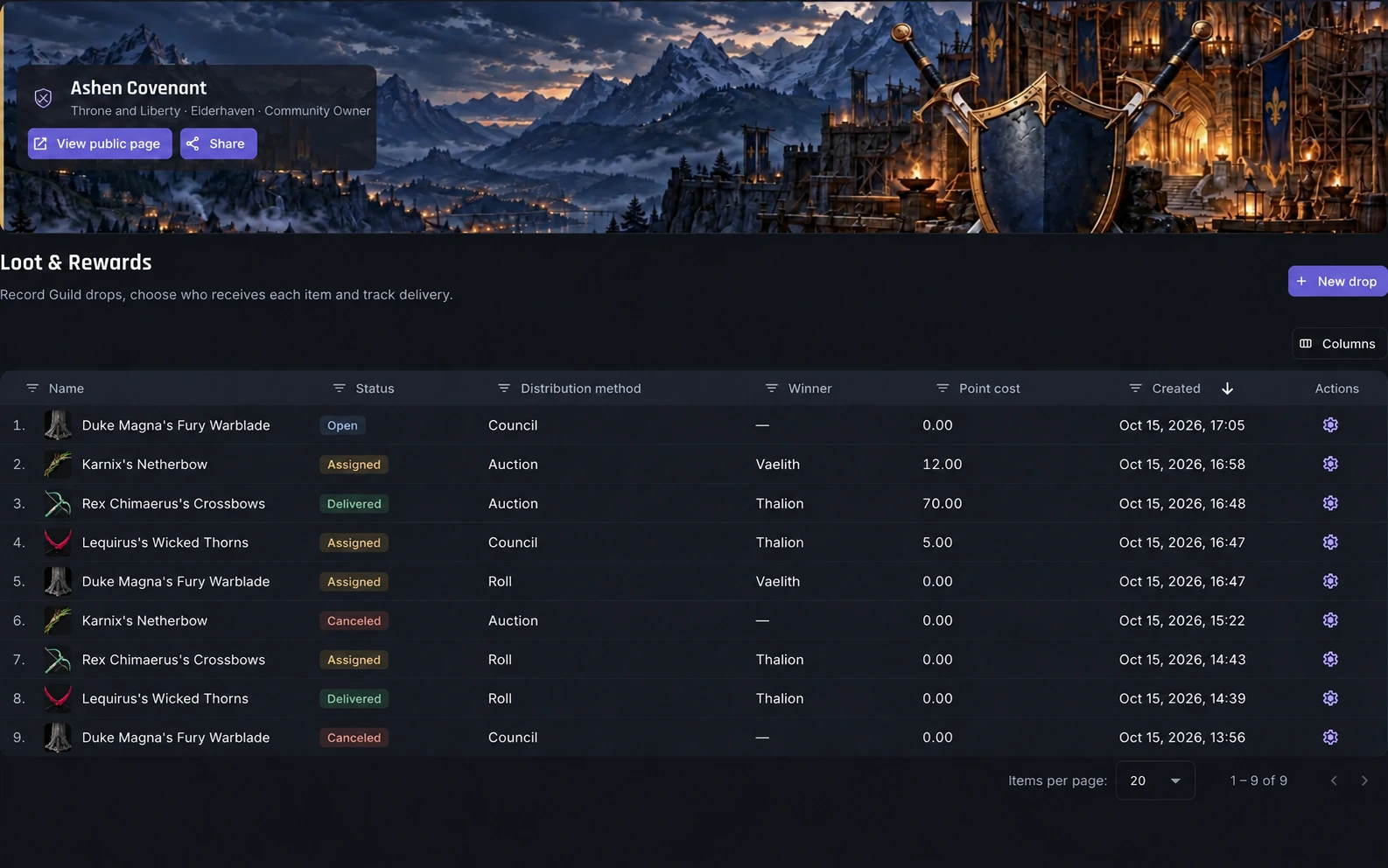
Loot is where guild friendships break. Whatever system you use – loot council, rolls, DKP-style points or auctions – members need to see that it is applied fairly and consistently.
That means:
- Points earned from confirmed attendance, not from memory.
- A full history of every point change and every item assignment.
- A clear method per drop: council decision, roll (need / greed / pass) or auction with point bids.
When the rules and the history are visible, arguments about loot shrink dramatically.
🌍 Multi-game communities and alliances
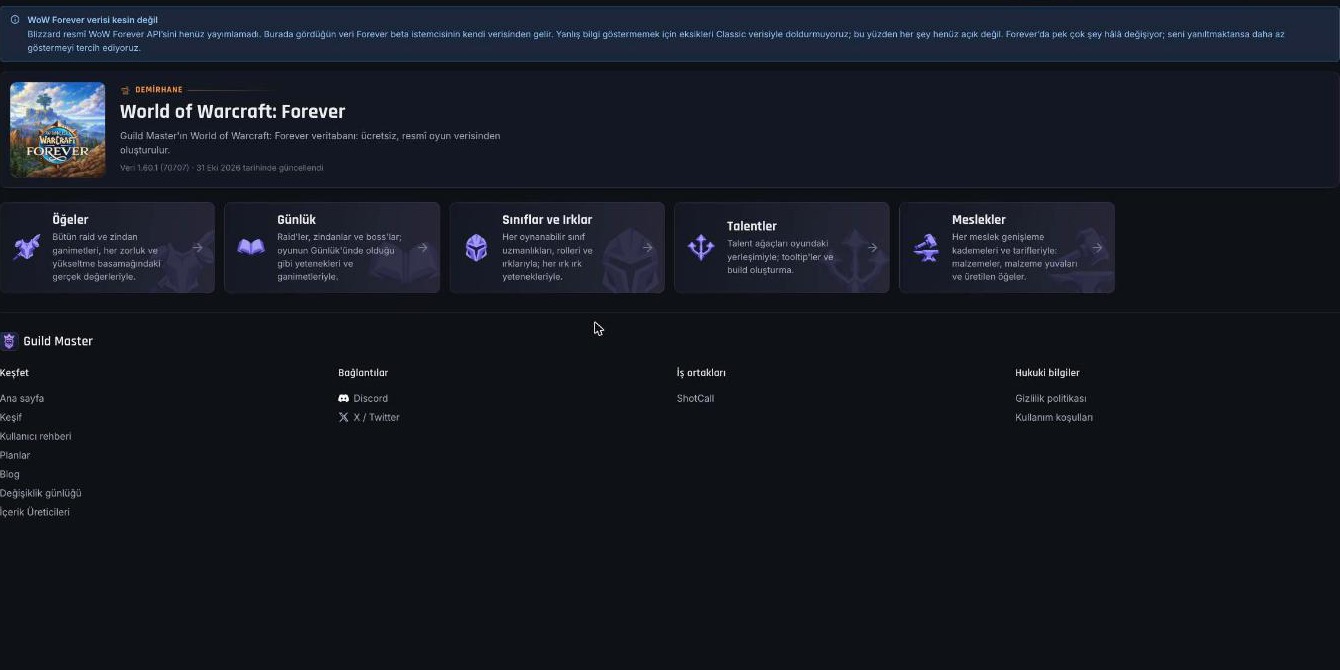
Modern gaming communities rarely stay in one game. The same Discord server might run a guild in one MMO, a static in another and a casual group in a third. Bigger events often need several communities working together as an alliance.
Spreadsheets cannot model this. You need a structure where one community can hold several games and guilds, and where communities can team up without giving away control of their own members.
✅ What the best free guild management tool should do
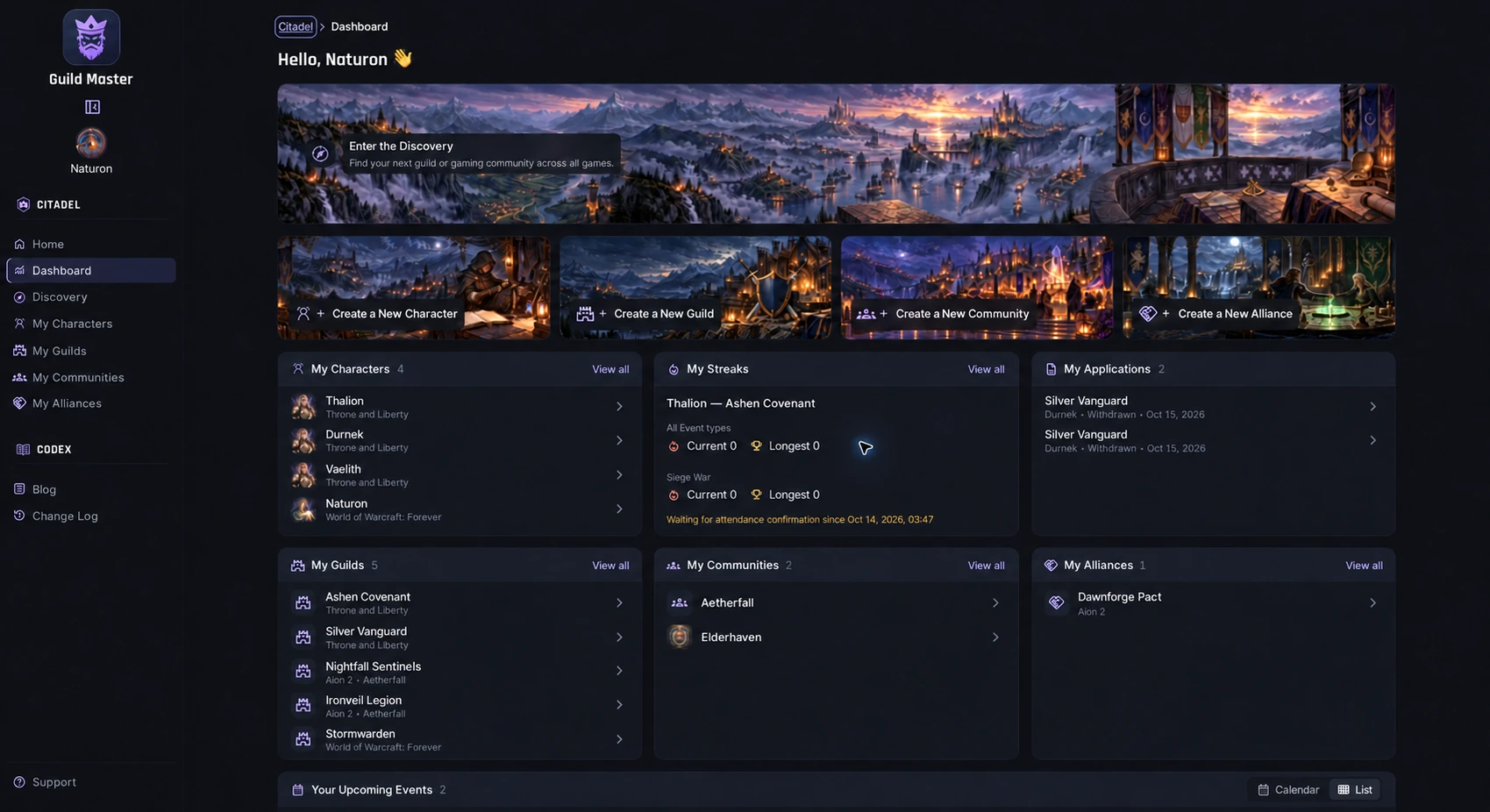
Use this checklist when you compare tools:
- Applications with your own questions and review from the panel or Discord.
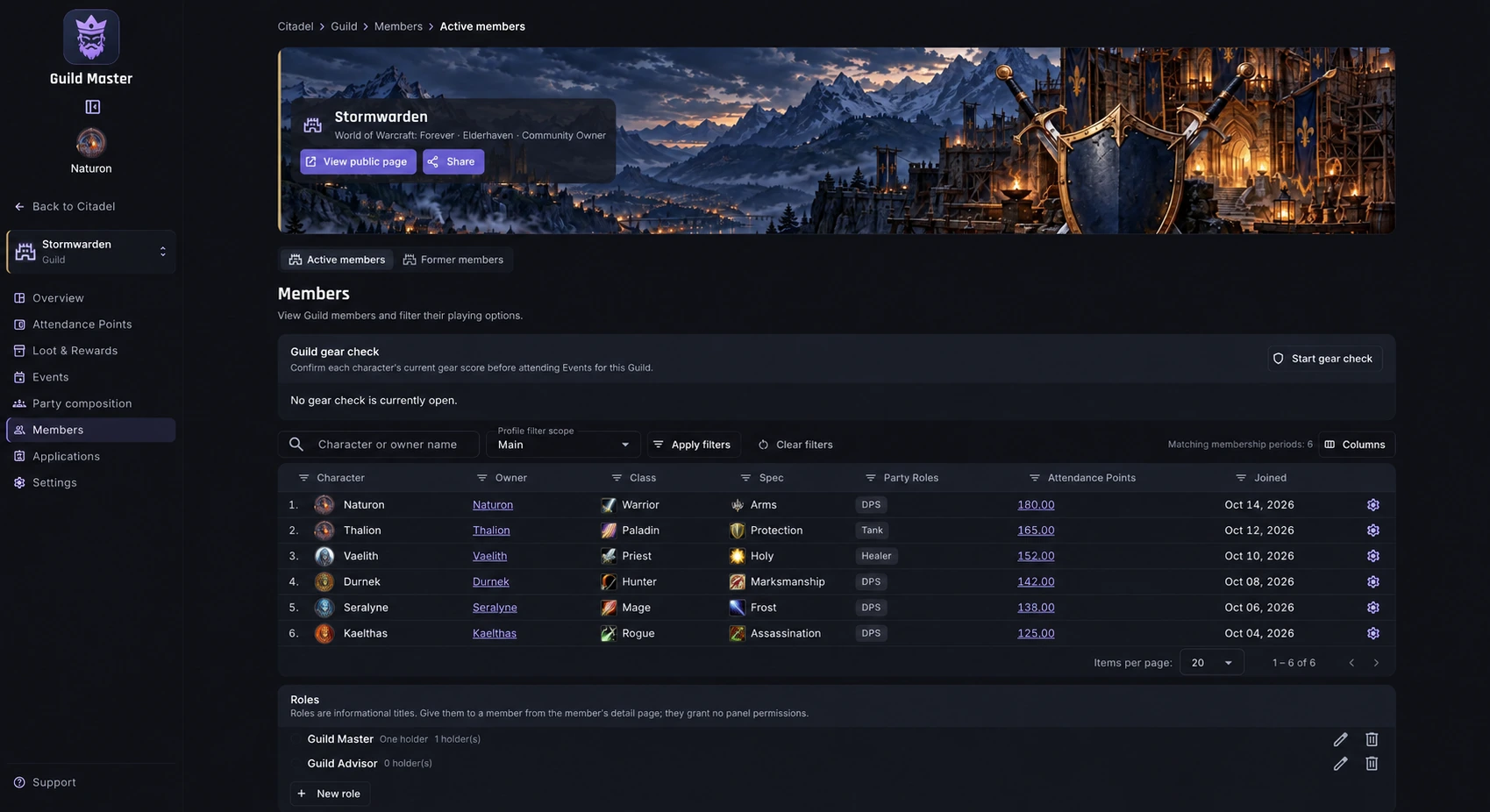
- Characters per game, with classes, roles and gear information.
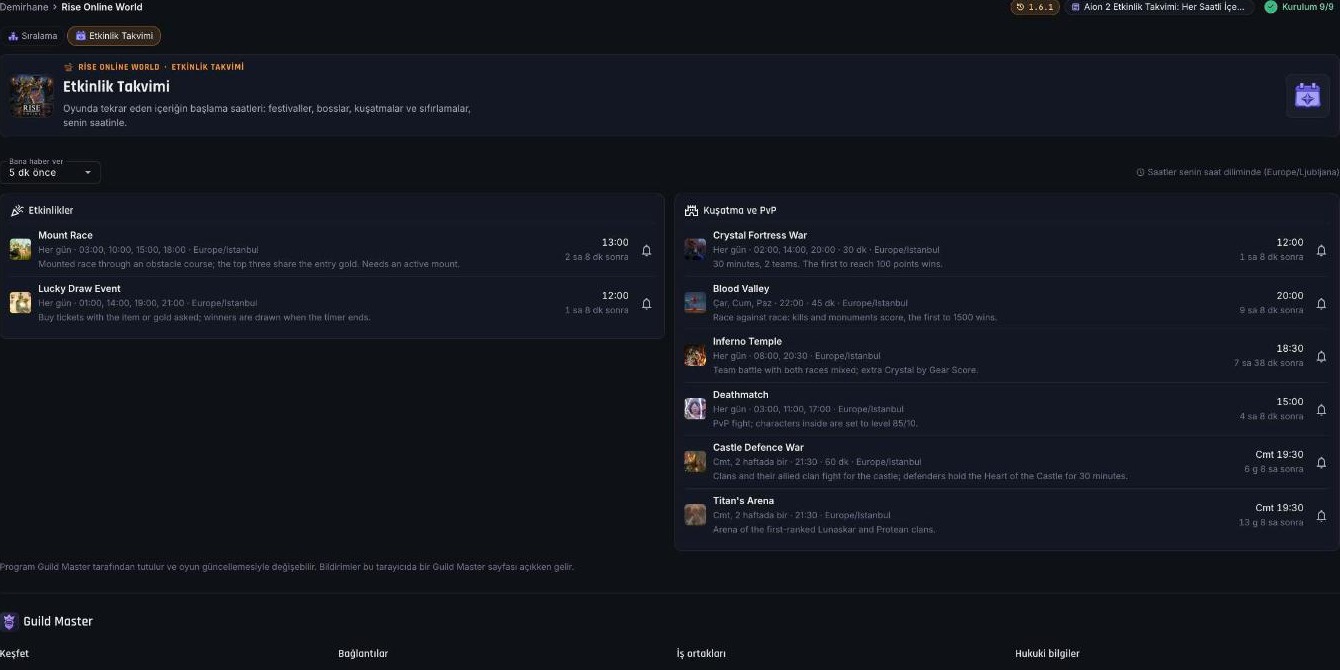
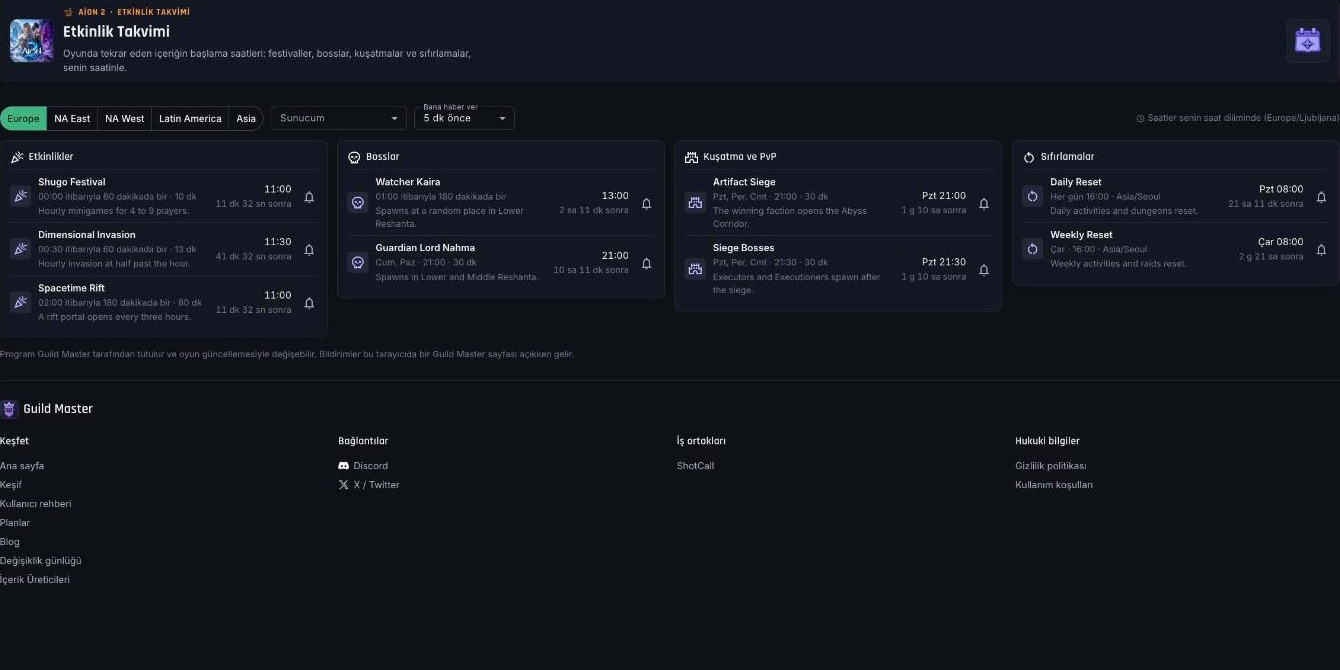
- Events with per-character RSVP, reminders and a calendar.
- Real attendance tracking that is separate from RSVP.
- Points and loot with council, roll and auction options and a full ledger.
- Party composition so raid leaders can build groups before the event starts.
- A Discord guild bot that syncs roles and posts events, applications, loot, welcome messages and announcements in your server.
- Roles and permissions, so officers can help without having full control.
- Public pages and discovery, so new players can find your guild.
- A free plan that covers a complete guild, not a trial that expires.
💸 Free should really mean free
"Free" can mean very different things. Before you move your guild to a new tool, check what the free plan really includes:
- Are all features available, or are attendance, loot or Discord integration locked behind a paid plan?
- Is there a member limit? A guild of 150 players should not have to pay just because it grew.
- How many guilds can you run in one game for free?
- What does the paid plan actually change – features, or only capacity?
Here is how Guild Master answers those questions:
- Every feature is free. Applications, events, attendance, points, loot, party composition and the Discord guild bot are all included.
- No member limit, no event limit.
- One active game with up to two Guilds, which covers the vast majority of gaming communities, even large ones that all play the same game.
- Premium only adds capacity, such as more active games and more Guilds at the same time, for €4.99 per month. It exists to help cover server costs; a single-game community never needs it.
You can compare everything on the Plans page.
❓ Frequently asked questions
What is a guild management tool? It is an app that handles the organizational side of a gaming guild: recruitment, members and characters, events and RSVP, attendance, points and loot, usually connected to Discord.
Is a Discord bot enough to manage a guild? A Discord guild bot is great for messages, sign-ups and roles, but most guilds also need a place that keeps history, permissions and attendance. The best setups combine a guild management bot with a web panel, which is exactly how the Guild Master bot works.
How do I track guild attendance fairly? Record RSVP and real attendance separately, confirm attendance after each event and award points from the confirmed result. That keeps the record objective.
Which loot system is best for an MMO guild? It depends on your culture. Loot council works for tight-knit groups, rolls for casual groups and point-based auctions for large raiding guilds. A good tool lets you choose per drop.
What is the best free guild management tool? Look for a tool that keeps every feature free, has no member limit, combines a Discord guild bot with a web panel, tracks attendance separately from RSVP, supports council, roll and auction loot and covers the games you play. The Guild Master bot does all of this for free; a single-game community never needs a paid plan.
Is there a free guild management tool? Yes. The Guild Master bot and panel are free for a complete single-game community, with Premium adding more active games and guilds.
🚀 Ready to try it?
Running a guild should not feel like a second job. Read how Guild Master handles all of the above, browse public guilds in Discovery or check the Documentation to set up your community in a few minutes.